If you’ve got a deck and a vague idea that it could be nicer out there, you’re in the right place!
Deck gardens tend to start with good intentions and then turn into a random collection of pots, a chair you forgot you owned, and maybe one plant that’s doing all the work.
But that’s normal!
Most people aren’t trying to build a showpiece, they just want a space that feels a little more alive and a little more inviting.
The good news is you don’t need a big yard, a plan, or a trip to a fancy garden center to pull that off.
Sometimes it’s just about shifting a few things around and letting the deck become a spot you actually want to use, not just walk across on the way somewhere else.
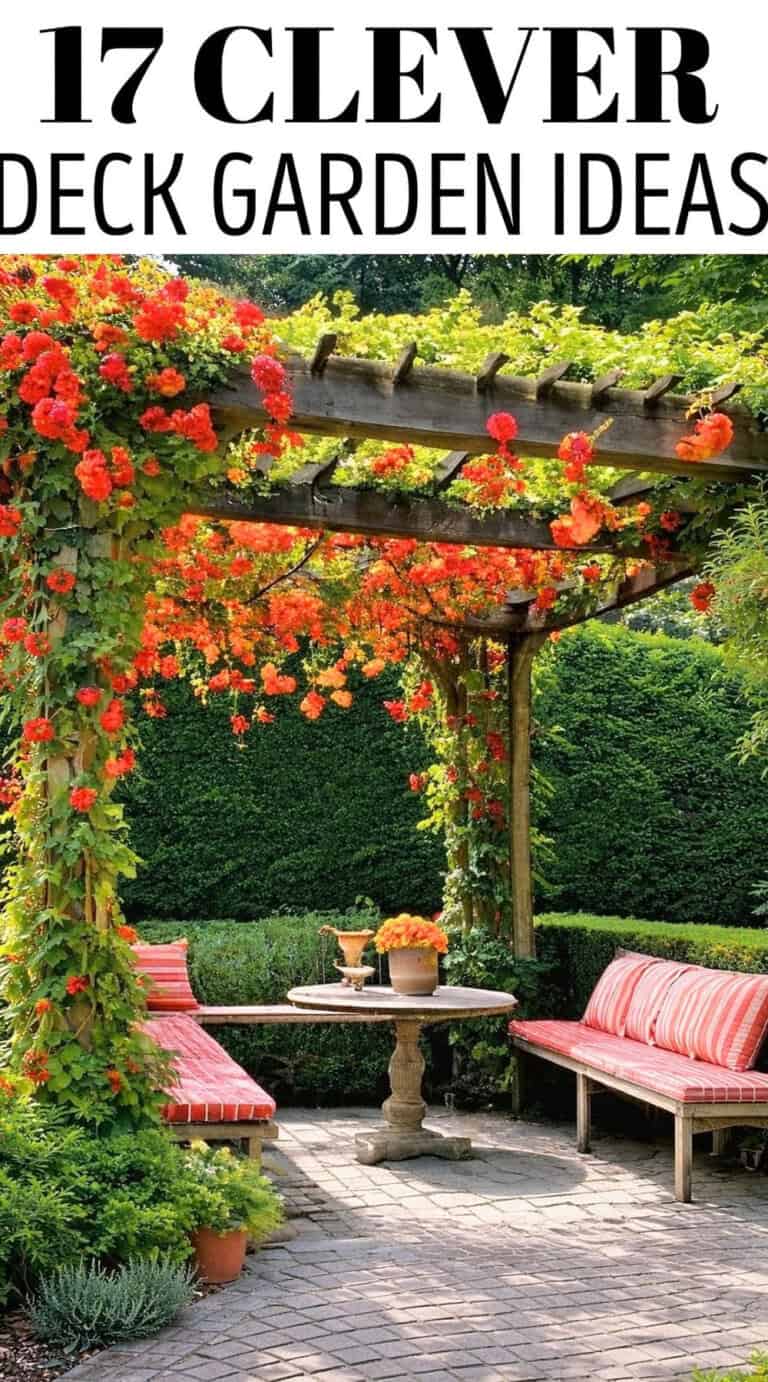
1. Pergola with Climbing Flowers
A pergola can sound like a huge commitment, but on a deck it can be much more relaxed than people think.
Lightweight pergola kits or simple frames set into large planters work well and don’t require tearing the whole space apart.
Climbing plants like clematis, jasmine, or even ivy do the heavy lifting once they get established and start filling things in.
The structure adds a bit of height and shade without closing the deck off.
After a while, it just feels like part of the space, not some big project that took over the backyard.
2. Hanging Herb Garden
A hanging herb garden works especially well on a deck because it keeps things off the floor and out of the way.
Small pots, wall-mounted planters, or even a rail system give herbs enough room without turning the space into an obstacle course.
It’s the kind of setup that looks intentional even when it’s a little uneven.
Plus, herbs are forgiving and don’t mind being clipped back when they get wild.
It adds green without demanding constant attention (my kind of garden!).
3. Container Veggie Garden
Container veggie gardens make a deck feel productive in a quiet, practical way.
Large pots or grow bags tucked along the edges give vegetables enough space without crowding the main seating area.
Tomatoes, peppers, and greens tend to do well as long as they get sun and consistent watering.
It doesn’t have to be perfectly organized to work.
A few mismatched containers can still turn into something satisfying once things start growing.
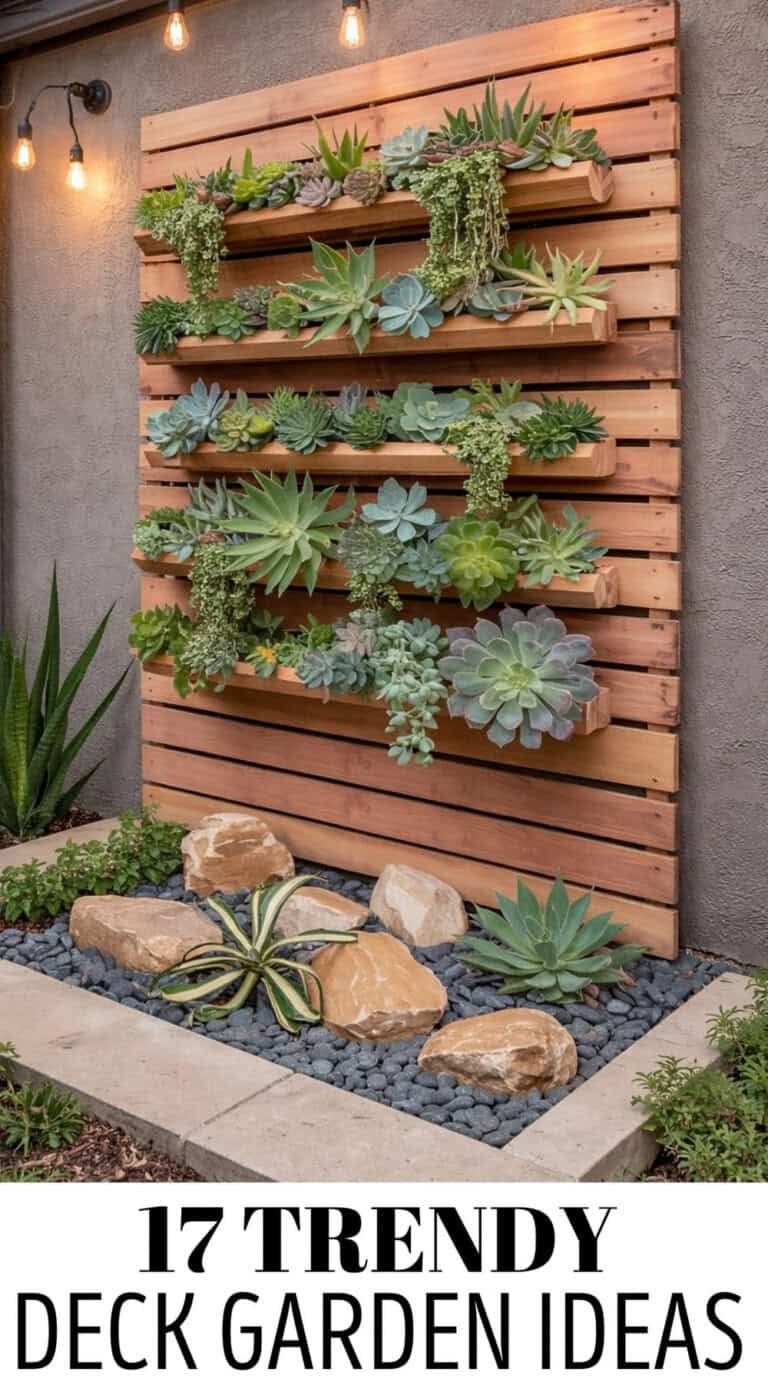
4. Succulent Wall
A succulent wall is one of those ideas that looks way fancier than it actually is.
Mounted planters or pocket-style wall systems let succulents grow vertically without taking up precious floor space.
Since they don’t need much water, they’re easy to manage and forgiving if a week gets busy.
The mix of shapes and colors adds interest without feeling busy.
It’s a good option for decks that need greenery but not more clutter.
5. Living Privacy Screen
A privacy screen with plants does double duty on a deck.
Trellises, slatted panels, or lattice can be paired with climbing plants or hanging planters to block views while still letting light through.
It feels softer than a solid wall and doesn’t box the space in.
Over time, the greenery fills gaps and makes the deck feel more tucked away.
6. Potted Trees
Potted trees bring a sense of scale that smaller plants just can’t match.
Large containers placed in corners or along railings help frame the deck and give it a grounded feel.
Trees like olive, fig, or dwarf citrus stay manageable in pots and add structure year-round.
And they don’t need to be perfectly symmetrical to look good!
A couple of well-placed trees can make the whole deck feel more intentional without a lot of effort.
7. Planter Water Fountain
A planter water fountain adds a quiet background sound that makes a deck feel calmer without turning it into a pond project.
Self-contained fountain kits fit easily inside large planters and don’t need much space or complicated setup.
The water movement gives the area a little life, even when everything else is still.
It works especially well tucked into a corner where it won’t get bumped.
Once it’s running, it just blends into the space in a really natural way.
8. Container Water Garden
A container water garden is a simple way to bring water into a deck setup without committing to anything permanent.
Large bowls or sealed planters can hold water plants and even small floating features.
It doesn’t take much to make it feel intentional, just a few plants and clean edges.
The reflection alone adds something special to the space.
It’s a nice option when the deck needs a focal point that isn’t another chair.
9. Planter Boxes
Planter boxes are one of the easiest ways to define a deck garden.
Long boxes along railings or edges help separate planting areas from seating without putting up barriers.
They’re flexible, too, since plants can be swapped out when something stops working.
Even simple boxes filled with greenery make the space feel more finished.
They quietly pull everything together without calling attention to themselves.
10. Raised Flower Beds
Raised flower beds can work on larger decks that have the room for them.
Low-profile beds keep plants contained and make watering and maintenance easier.
They add structure without feeling bulky or overwhelming.
Flowers tend to look fuller and more intentional when they’re grouped this way.
11. Big Potted Plants
Big potted plants are great for filling awkward empty spots on a deck.
Oversized containers instantly make smaller plants feel more grounded and intentional.
They work well near seating areas where smaller pots would get lost.
Even just one or two can change how the whole space feels.
It’s an easy way to add impact without adding a lot of extra work.
12. Hanging Baskets
Hanging baskets add greenery without taking up any deck space at all, which is always a win.
They work well from pergolas, hooks, or sturdy rail mounts and help soften hard lines.
Trailing plants make everything feel a little more relaxed once they start spilling over the edges.
They don’t have to match or be perfectly spaced to look good.
A few baskets can make the whole deck feel more layered and lived-in.
13. Stacked Planters
Stacked planters are a smart way to fit more plants into a smaller footprint.
They work well in sunny corners where single pots would feel underwhelming.
Herbs, flowers, or small greens all do well in this kind of setup.
It adds height without blocking sightlines or making the deck feel crowded.
The vertical element helps break up flat spaces nicely.
14. Vertical Garden
A vertical garden turns unused wall space into something useful and green.
Wall-mounted planters, grids, or pocket systems let plants grow upward instead of spreading out.
It’s especially helpful on narrow decks where floor space is limited.
The result feels intentional without being overwhelming.
Over time, it becomes part of the backdrop instead of a separate feature!
15. Ladder Garden
A ladder garden leans easily against a wall or railing and doesn’t need much setup.
The shelves give plants different heights, which keeps things visually interesting.
It works well for herbs, flowers, or small trailing plants.
Since it’s not permanent, it’s easy to adjust when something outgrows its spot.
16. Rock Garden
A rock garden on a deck brings in texture without relying on a lot of plants.
Shallow trays or wide planters filled with stones and hardy plants keep things contained.
It works especially well in sunny areas where other plants struggle.
The mix of rock and greenery adds contrast without looking busy.
It’s low maintenance and quietly interesting at the same time!
What Plants and Flowers Work Best for a Deck?
Deck plants have to be a little tougher than garden-bed plants.
They deal with more wind, more sun, more drying out, and sometimes a lot of foot traffic brushing past them.
The good news is there are plenty of plants that actually do better in containers and don’t mind living up off the ground.
Mixing a few dependable options with one or two statement plants usually works better than trying to keep everything delicate and perfect.
Here are some of the best plants to use in your deck garden:
- Herbs like basil, rosemary, thyme, and mint
- Trailing plants like ivy, sweet potato vine, and creeping jenny
- Flowering plants like petunias, geraniums, marigolds, and calibrachoa
- Hardy greens like hostas, ferns, and ornamental grasses
- Succulents like hens and chicks, echeveria, and sedum
- Small trees or shrubs like dwarf citrus, olive trees, boxwood, or hydrangea
Sun exposure makes a big difference, so it helps to notice which parts of the deck get full sun and which stay shaded.
Containers dry out faster than garden beds, so plants that can handle a missed watering tend to be less stressful to keep alive.
Mixing textures, heights, and a little spill-over makes everything look more natural.
The best deck gardens usually come from choosing plants that fit the space, not fighting it.
A Deck Garden That Doesn’t Try Too Hard
A deck garden doesn’t have to be impressive or perfectly planned to work.
It just needs to feel like a place someone actually spends time.
A few good plants, some height, and a little variety go a long way without turning it into a project that needs constant attention.
Things grow unevenly, pots get shuffled around, and something usually dies at least once, and that’s all part of it.
When the deck feels comfortable enough to sit down without fixing anything first, that’s usually when it finally feels right!