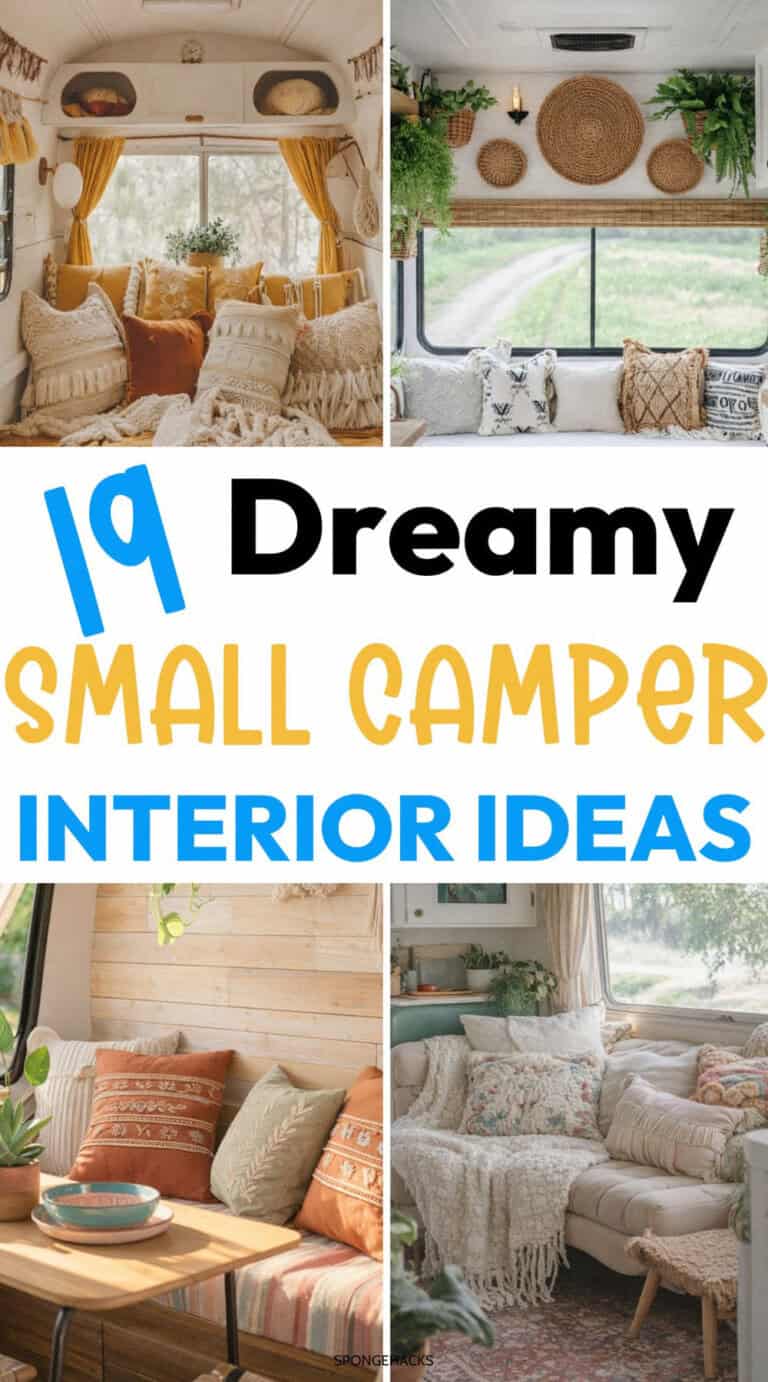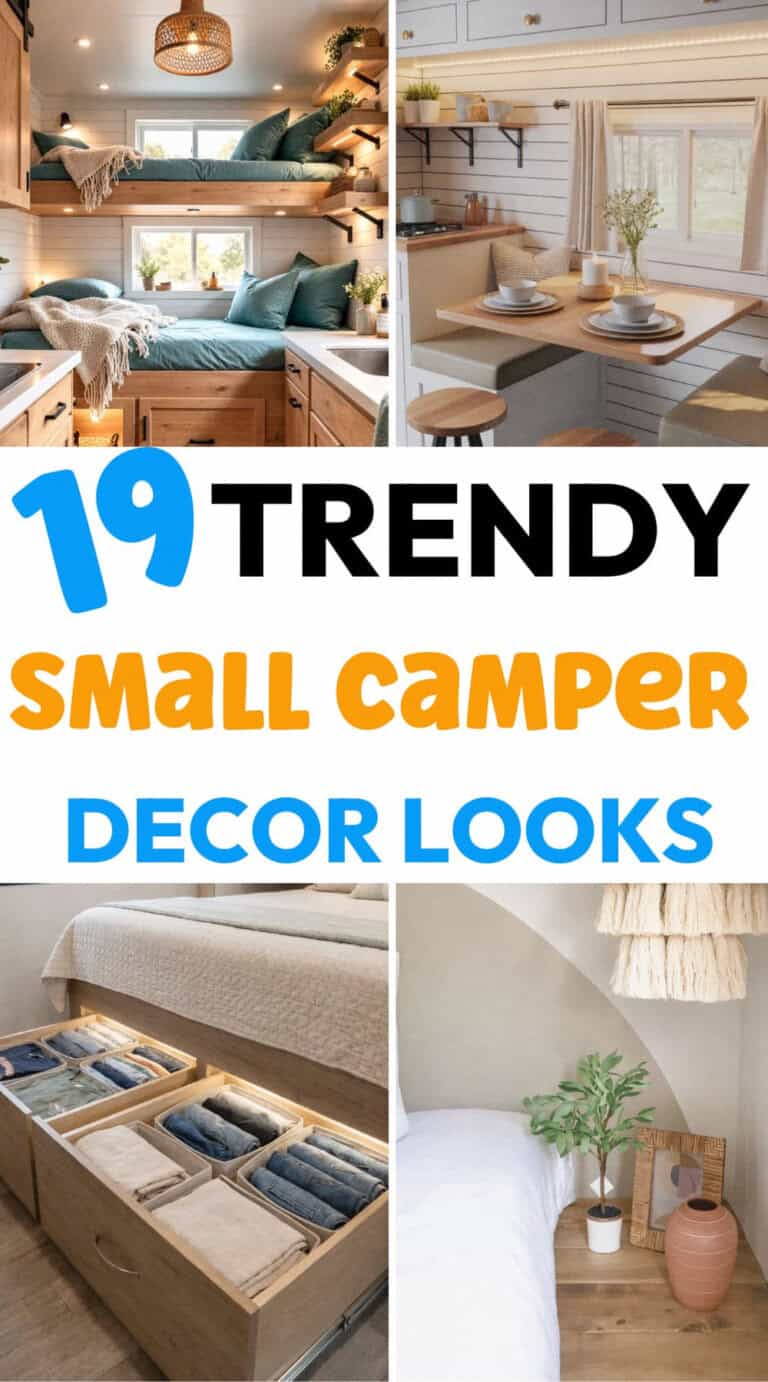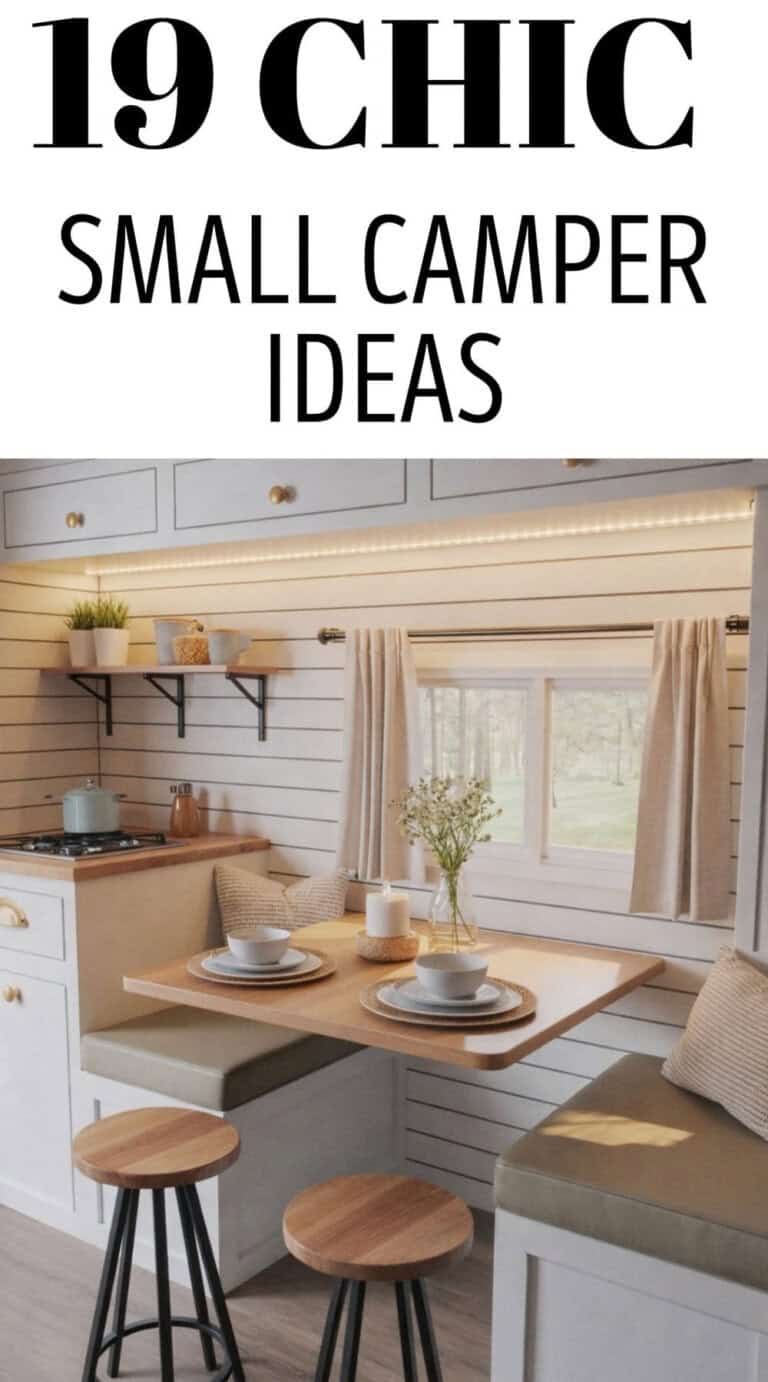
Small campers are great until you’re tripping over shoes, knocking elbows at the table, and wondering how the space somehow shrank overnight.
Most people aren’t trying to make their camper look fancy, they just want it to feel less cramped and more livable.
The good news is you don’t need a full remodel or custom furniture to make that happen!
A few smart layout tweaks, storage swaps, and visual tricks can change how a tiny camper feels almost immediately.
And these ideas are about making room for real life, not creating something that looks good for five minutes and then falls apart.
It also takes the pressure off, because you’re not chasing perfection — you’re just making the space work for your family.
Small changes build on each other, and before you know it, the whole camper feels calmer and easier to manage.
That’s the real win: a setup that supports your days instead of adding more chaos to them.
Light and Neutral Color Choices
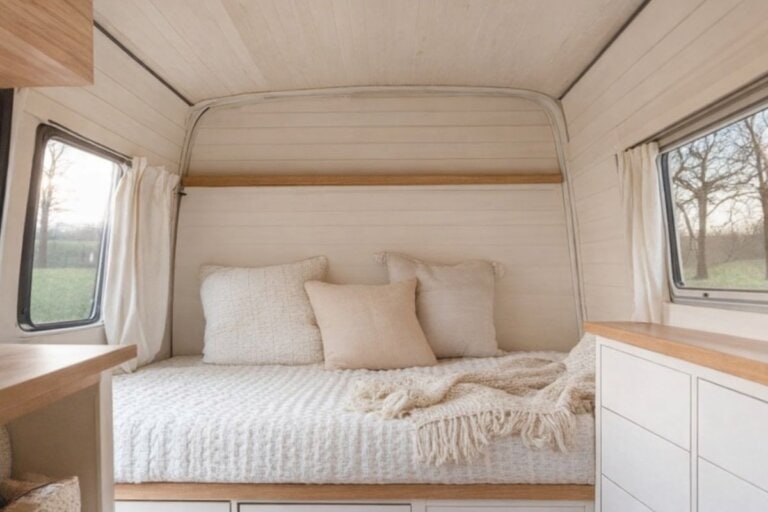
Color does a lot of heavy lifting in a small camper, especially when there isn’t much space to begin with.
Lighter tones help bounce light around and keep everything from feeling boxed in or heavy.
These are changes that work with real camper life, not against it.
1. White or Cream Wall Finishes
White or cream walls instantly make a small camper feel less tight, even if nothing else changes.
They reflect light instead of soaking it up, which helps on cloudy days or when you’re parked somewhere shady.
Cream tones tend to feel warmer and more forgiving than stark white, especially if the camper has older finishes or lower ceilings.
They also hide scuffs better, which matters in a space where everything gets bumped eventually.
If painting feels like too much, peel-and-stick wallpaper in a soft neutral can give the same effect without the commitment.
The goal is to let the walls fade back a bit so the space feels wider.
2. Light Wood Cabinetry
Dark cabinets can make a camper feel smaller fast, especially when they wrap around the whole space.
Light wood finishes keep things grounded without feeling heavy or closing in the room.
They add warmth so the camper still feels cozy, not like a storage unit on wheels.
Even swapping out dark cabinet doors for lighter ones or sanding and refinishing can make a noticeable difference.
Light wood also plays well with almost any fabric or decor, which makes future changes easier.
t keeps the space feeling flexible instead of locked into one look.
3. Soft Neutral Upholstery
Upholstery takes up a lot of visual space in a camper, so bold colors can feel overwhelming quickly.
Soft neutrals like beige, light gray, or warm taupe keep seating from dominating the room.
These tones make the space feel calmer and less cluttered, even when the camper is fully packed.
Neutral upholstery also hides everyday wear better than pure white, which is helpful when snacks and shoes are involved.
It gives more freedom to add personality with pillows or throws without things getting busy.
The seating still feels comfortable, just not visually loud.
Smart Furniture for Small Spaces
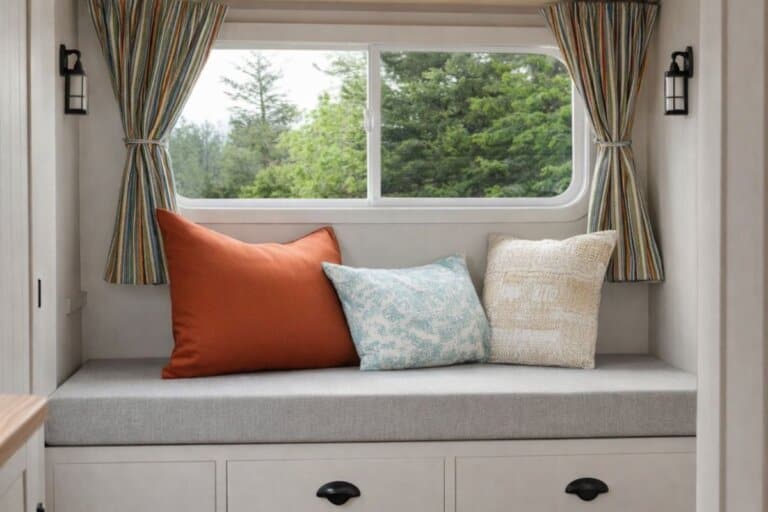
Furniture matters more in a camper than almost anything else because it has to do more than one job.
When pieces can shift, fold, or hide storage, the whole space starts working better instead of fighting you.
These are practical choices that make daily life easier, not clever ideas that look good once and get annoying fast.
4. Convertible Dinette Seating
Convertible dinette seating is one of those things that seems basic until you realize how much space it actually saves.
During the day, it’s a place to eat, work, play cards, or dump groceries for a minute.
At night, it turns into a sleeping spot without needing a separate room or bulky furniture.
The real win is when the cushions are easy to move and don’t feel like wrestling a mattress every evening.
Some setups also hide storage underneath, which is huge in a small camper.
When the dinette works smoothly, the whole camper feels more flexible!
5. Fold Down Tables or Desks
A fold down table or desk is perfect for campers where every inch counts.
It gives you a surface when you need it and disappears when you don’t, which helps keep walkways open.
These work especially well for quick meals, laptops, or kids doing something messy that shouldn’t live on the main table.
Mounted properly, they don’t feel flimsy or temporary.
The space feels bigger simply because you’re not navigating around furniture all the time.
6. Built In Bench Seating
Built in bench seating pulls double duty without looking like it’s trying too hard.
It creates a clear place to sit while also offering hidden storage underneath for shoes, blankets, or random camper stuff.
Because it’s built in, it keeps the layout feeling cleaner and more intentional.
Benches also tend to take up less visual space than bulky chairs, which helps the room feel more open.
With the right cushions, they’re comfortable enough to actually use, not just look at.
Storage That Saves Space
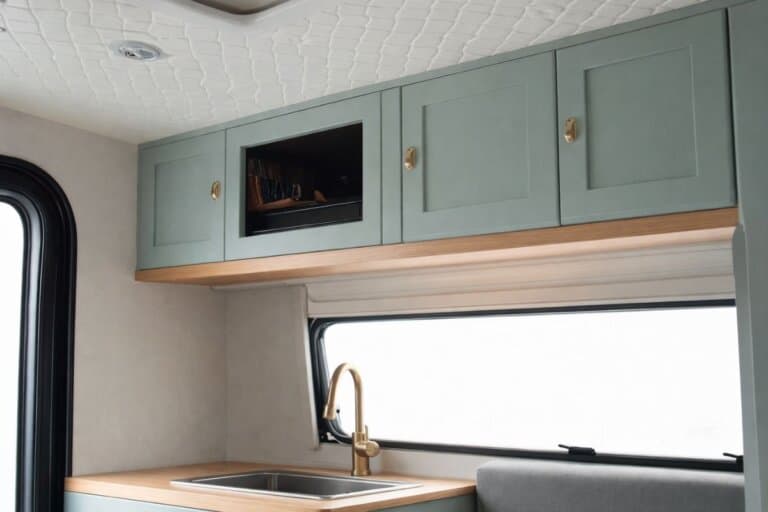
Storage can either make a small camper feel organized or make it feel like you’re living inside a pile of stuff.
The trick is using space that already exists instead of adding bulky bins everywhere.
When storage is built in or tucked out of the way, the camper feels calmer and easier to move around in.
These ideas focus on keeping things accessible without making the space feel crowded.
7. Under Bed Storage Drawers
Under bed storage drawers are one of the easiest ways to gain space without changing the layout at all.
That area usually ends up wasted or filled with things you forget about, which isn’t helpful when space is tight.
Drawers make it easier to actually use the storage without pulling everything out to reach one item.
They work well for clothes, extra bedding, or gear you don’t need every day but still want close by.
When the storage slides out smoothly, it feels less like hiding stuff and more like the space was designed that way.
It keeps the rest of the camper from filling up with loose items.
8. Wall Mounted Shelving
Wall mounted shelving uses vertical space that usually gets ignored in campers.
A few well placed shelves can hold everyday items without taking up floor space or crowding walkways.
They’re great for things you reach for often, like mugs, books, or small storage baskets.
Open shelving keeps the space from feeling closed in, especially when the shelves aren’t packed too tight.
It also makes it easier to stay organized since everything is visible.
The key is keeping it light and functional, not turning the walls into clutter.
9. Overhead Cabinets
Overhead cabinets are useful, but they can make a camper feel heavy if they’re not used thoughtfully.
Lighter finishes help them blend in instead of looming over the space.
These cabinets are best for items you don’t need constantly, like pantry backups or extra supplies.
Keeping them organized prevents that top heavy feeling where everything feels stacked.
When overhead cabinets are tidy and not overstuffed, the camper feels taller and less cramped.
They work best when they support the space instead of dominating it.
Simple Visual Tricks
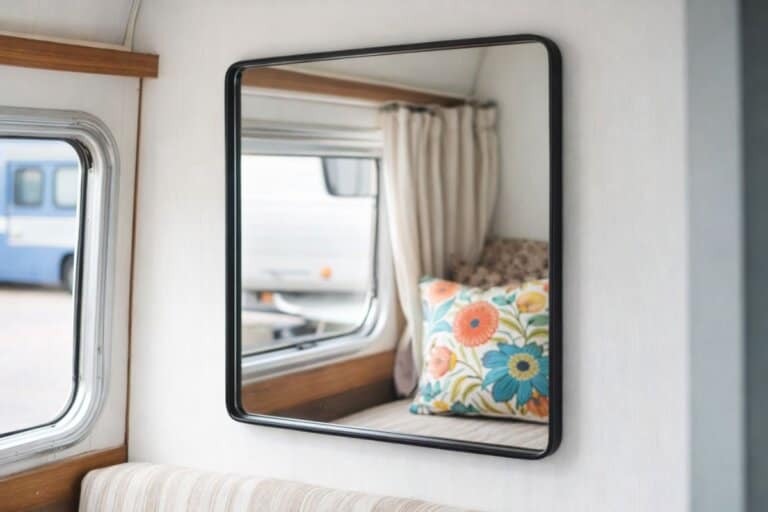
Sometimes the space doesn’t actually change, it just feels different once your eyes stop getting overwhelmed.
Visual tricks are about how things look at a glance, especially in tight areas where every detail shows.
These ideas are easy to add and don’t require tools or major changes.
And they help the camper feel more open without rearranging the whole setup.
10. Mirrors to Reflect Light
Mirrors are one of the fastest ways to make a small camper feel bigger without touching the layout.
They bounce light around, which helps on darker days or in spots that don’t get much natural light.
Even a small mirror can make a narrow area feel wider than it actually is.
Placing one across from a window works especially well and doesn’t feel obvious.
Mirrors also break up flat walls so the space feels less boxed in.
11. Vertical Stripes or Lines
Vertical lines naturally pull the eye upward, which helps low ceilings feel less cramped.
This can be done with wallpaper, paneling, or even fabric choices like curtains or cushions.
Soft, subtle stripes work better than bold patterns in a small camper.
The goal is to add height without making the space feel busy.
Vertical details also help guide the eye through the space instead of stopping it at one spot.
12. Clear or Slim Furniture Pieces
Bulky furniture can make a small camper feel crowded fast, even if it technically fits.
Clear or slim pieces take up less visual space, which helps the room feel more open.
Things like narrow tables, open frame chairs, or furniture with visible legs keep the space from feeling blocked.
When light can pass through or around furniture, the camper feels less tight.
These pieces still function the same but don’t dominate the room. It’s about letting the space breathe a little.
Soft Textiles Without Bulk
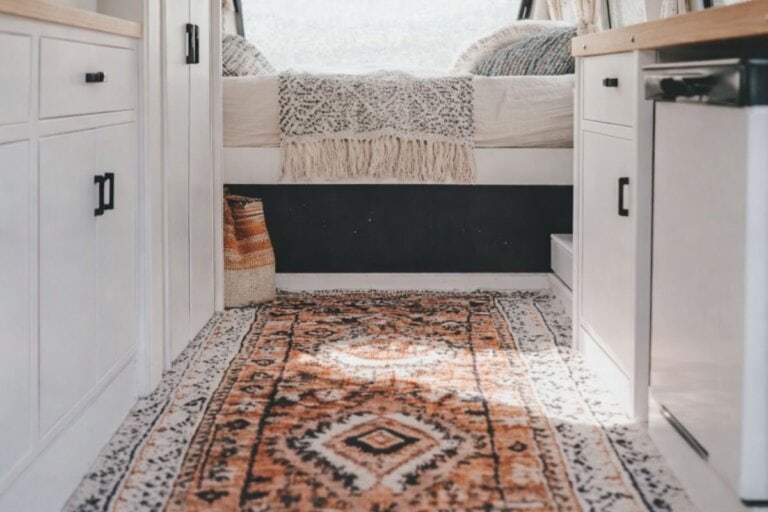
Textiles make a camper feel livable, but too many heavy fabrics can close the space in fast.
The goal here is softness without thickness, comfort without crowding.
These choices keep things cozy without adding visual weight. Everything still feels relaxed and usable, just not stuffed.
13. Lightweight Curtains or Shades
Heavy curtains can make a small camper feel dark and closed off, even when they’re pulled open.
Lightweight curtains or simple shades let light through while still giving privacy when needed.
Sheer or linen style fabrics work especially well because they soften the space without blocking it.
They move easily and don’t feel stiff or bulky against the walls.
When the windows feel open, the whole camper feels bigger.
14. Neutral Throw Pillows
Throw pillows are an easy way to add comfort, but too many bold colors can make seating feel cluttered.
Neutral pillows blend in better and don’t fight for attention in a small space.
They still add softness, just without turning the dinette or bed into a pile.
Keeping the colors simple also makes it easier to mix things up later without replacing everything.
A couple well chosen pillows do more than a stack you’re constantly moving around.
15. Low Profile Rugs
Thick rugs can bunch up, trip people, and visually shrink the floor space in a camper.
Low profile rugs sit flatter and keep walkways feeling clear.
They still define areas like the dinette or sleeping space without adding bulk.
Flat woven styles work especially well because they’re easy to clean and don’t overwhelm the room.
A rug should ground the space, not compete with it.
When the floor feels open, the camper feels bigger overall.
Minimal Decor That Still Feels Homey
Decor is where small campers can go sideways fast.
A little too much and suddenly every surface feels crowded, but nothing at all can feel cold or unfinished.
These ideas help the space feel lived in, not staged.
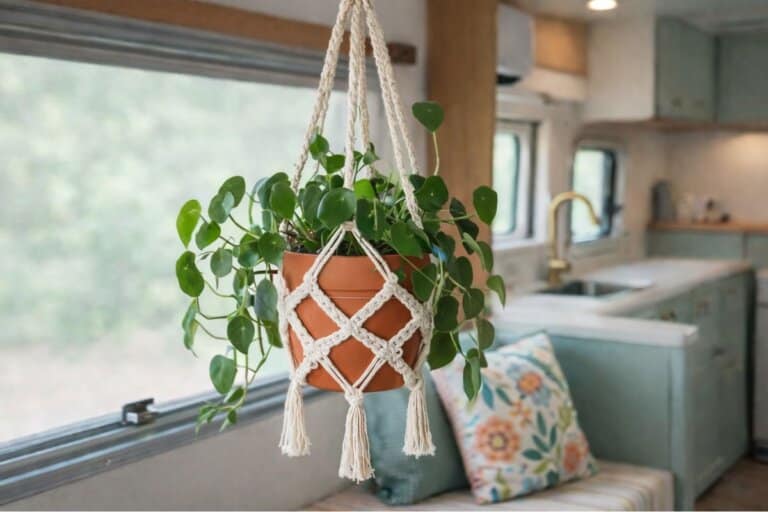
16. Small Potted Plants
Small potted plants add life to a camper without taking up much room.
They soften hard edges and make the space feel less temporary, even if you’re only parked for a weekend.
The key is keeping them small and easy to move so they don’t become something else to work around.
One or two tucked on a shelf or counter is plenty.
Real or fake both work as long as they’re not oversized.
It’s just enough green to make the space feel warmer.
17. Simple Wall Art
Wall art doesn’t need to be big or bold to make a difference!
A few simple pieces help the camper feel personal without overwhelming the walls.
Smaller frames or lightweight prints are easier to hang and don’t feel heavy in tight spaces.
Keeping the colors soft or neutral helps everything blend instead of shouting for attention.
Wall art works best when it fills empty spots, not every inch.
It should feel casual, like it naturally ended up there.
18. Coordinated Storage Bins
Storage bins are already doing the hard work, so they might as well look decent too.
When bins are coordinated in color or style, the space feels calmer even if they’re out in the open.
This matters a lot in campers where storage is often visible.
Matching bins make shelves and cabinets feel more intentional instead of messy.
They also make it easier to put things back where they belong.
It’s a small detail that quietly pulls the space together.
19. One Statement Accent
A single statement accent gives the camper personality without cluttering it up.
This could be a bold pillow, a light fixture, a patterned rug, or one piece of art that stands out.
Limiting it to one keeps the space from feeling busy or chaotic.
Everything else can stay simple and supportive.
That one accent gives your eye somewhere to land, which actually makes the rest of the space feel calmer.
Simple Changes That Actually Make a Small Camper Work
You don’t need a bigger camper to make it feel better to live in!
Most of the time, it’s just a handful of small changes that stop the space from fighting you every day.
When colors stay light, furniture pulls double duty, and storage is doing its job, everything feels easier to move around in.
The camper starts to feel functional instead of frustrating.
Oh, and if you’re looking for more camper decor ideas, check out my post here for boho ideas!